

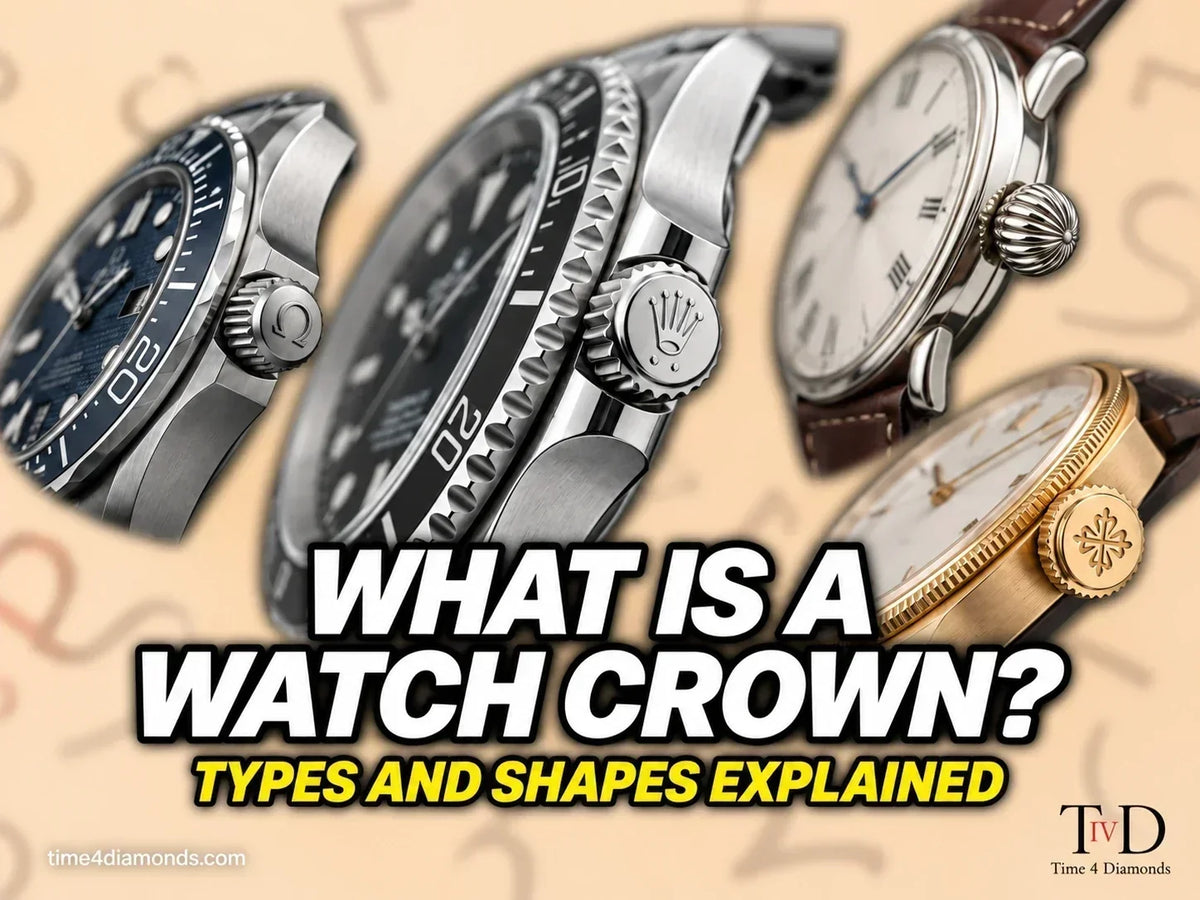
ما هو تاج الساعة؟ شرح الأنواع والأشكال والوظائف

الملخص: تاج الساعة هو المقبض المحزز الموجود على جانب العلبة، وعادةً عند موضع الساعة 3، ويُستخدم لتعبئة النابض الرئيسي وضبط الوقت والتاريخ عبر ساق تمتد إلى داخل الحركة. النوعان الرئيسيان هما تاج السحب والدفع والتاج اللولبي. كما تأتي التيجان بأشكال مختلفة مثل البصلي والمخروطي والمحزز والكابوشون، وتحميها العلامات التجارية بواسطة واقيات أو جسور أو أنظمة قفل.
- ساهمت رولكس في نشر التاج اللولبي مع علبة Oyster عام 1926، اعتماداً على طلب براءة اختراع قدمه بول بيريغو وجورج بيريه في 30 أكتوبر 1925.
- تستخدم تيجان Rolex Twinlock، التي قُدمت عام 1953، منطقتين محكمتي الإغلاق وتوجد في موديلات رولكس المصنفة عادةً لمقاومة الماء حتى 100 متر؛ أما تيجان Triplock (عام 1970، وظهرت أولاً على Sea-Dweller) فتستخدم ثلاث مناطق إحكام وتوجد في Submariner وSea-Dweller وDeepsea وGMT-Master II وYacht-Master وDaytona، مع ملاحظة أن تصنيف العمق النهائي تحدده العلبة كاملة وليس التاج وحده.
- تستخدم كارتييه الياقوت أو الإسبنيل الصناعي في الأحجار الزرقاء المثبتة على التيجان بحسب المرجع.
- قدمت رولكس واقيات التاج المدمجة عام 1959 على Submariner وGMT-Master؛ بينما حصلت بانيراي على براءة اختراع لجسر حماية التاج عام 1956.
- تستخدم Richard Mille محدد وظائف، ظهر لأول مرة على RM 002 عام 2001، للتنقل بين التعبئة وضبط العقارب ووظيفة وسيطة مثل الوضع المحايد أو التاريخ، ويتم تشغيله بواسطة زر في التاج أو بسحب التاج بحسب المرجع.
معظم الناس لا يفكرون في تاج الساعة حتى يتوقف عن أداء ما يتوقعونه منه. قد يعلق، أو يدور من دون تعبئة، أو يرفض التاريخ التغيير. ومع ذلك فهو أحد عناصر التحكم القليلة التي تستخدمها بيدك، وفي الساعة الفاخرة يخفي هندسة أكثر مما يوحي به حجمه.
تشرح هذه المقالة من Watchpedia ما هو تاج الساعة، وكيف يتصل بالحركة، والأنواع والأشكال التي ستجدها لدى رولكس وكارتييه وبانيراي وIWC وRichard Mille، وكيفية استخدامه والعناية به. وإذا كنت جديداً على أجزاء الساعة، فستجد إلى جانبها المقالتين المرتبطتين حول إطار الساعة وأنواع زجاج الساعة.
ما هو تاج الساعة؟

التاج هو المقبض الصغير المحزز عادةً والمثبت على جانب العلبة. يوجد في نهاية قضيب فولاذي يسمى ساق التعبئة، ويمر هذا الساق عبر أنبوب مثبت في جدار العلبة (ويكون ملولباً في التصاميم ذات التاج اللولبي) ليتصل بآلية الضبط بدون مفتاح داخل الحركة. عند تدوير التاج يدور الساق معه؛ وعند سحب التاج إلى الخارج، يحرك الساق مجموعة من التروس من وضع التعبئة إلى وضع الضبط.
بين التاج والعلبة توجد حشية مطاطية واحدة أو أكثر (حلقات O). وهي العناصر التي تمنع دخول الماء والغبار عند النقطة التي يمر فيها جزء متحرك عبر العلبة، مما يجعل التاج أحد أهم نقاط الدخول المحتملة للرطوبة في أي ساعة مقاومة للماء، ويفسر مقدار الجهد الهندسي المبذول لإحكامه. يشرح مقال مقاومة الماء في الساعات كيفية اختبار هذه التصنيفات.
جاء الاسم من الشكل. فقد كانت ساعات الجيب المبكرة التي تُعبأ بواسطة الساق تحمل مقبضاً دائرياً ومحززاً في أعلى القلادة يشبه تاجاً ملكياً صغيراً، واستمر الاسم عندما انتقلت الساعات إلى المعصم. ويُنسب نظام الضبط بدون مفتاح الذي جعل ذلك عملياً عموماً إلى جان أدريان فيليب، الذي أصبح لاحقاً من Patek Philippe، إذ جمعت براءة اختراعه الفرنسية رقم 1317 لعام 1845 بين التعبئة وضبط العقارب في تاج واحد. ولم يكن أول من حاول ذلك: فقد حصل توماس بريست على براءة اختراع لآلية تعبئة بدون مفتاح في إنجلترا عام 1820، لكن تصميم فيليب هو الذي انتشر. وقبل التعبئة بدون مفتاح، كانت الساعات تُعبأ باستخدام مفتاح منفصل.
ماذا يفعل تاج الساعة؟
يؤدي التاج ثلاث وظائف في معظم الساعات الميكانيكية: تعبئة النابض الرئيسي، وضبط الوقت، وضبط التاريخ عند توفره. لكل وظيفة موضع مختلف عند سحب التاج. يختلف الترتيب الدقيق بحسب الحركة، لذا اعتبر الجدول أدناه النمط الشائع وليس قاعدة لكل مرجع.
| الموضع | حالة التاج | وظيفته |
|---|---|---|
| 0 | ملولب ومغلق (للتيجان اللولبية فقط) | مثبت بإحكام على العلبة. يجب فكه قبل التعبئة أو الضبط. أعده دائماً إلى هذا الموضع بعد الاستخدام. |
| 1 | مدفوع للداخل، أو مفكوك ومستند إلى العلبة | التعبئة اليدوية. يؤدي التدوير مع عقارب الساعة إلى شد النابض الرئيسي. |
| 2 | مسحوب نقرة واحدة | الضبط السريع للتاريخ (واليوم في بعض الحركات). وفي ساعة الوقت فقط يكون هذا موضع ضبط الوقت. |
| 3 | مسحوب بالكامل | ضبط الوقت. في كثير من الحركات الحديثة يتوقف عقرب الثواني (hacking) لتتمكن من ضبط الوقت حتى الثانية. |
تضيف بعض الساعات وظائف أخرى هنا. تستخدم ساعة GMT مثل Rolex GMT-Master II الموضع 2 لتحريك عقرب الساعة المحلي بشكل مستقل. أما الكرونوغراف فعادةً ما يبقي وظيفة التوقيت على أزرار منفصلة بدلاً من التاج، رغم أن تصاميم الزر الأحادي مثل IWC Big Pilot's Watch Monopusher تدمج الزر داخل التاج نفسه.
أنواع تيجان الساعات حسب الآلية
يمكن تصنيف التيجان بطريقتين: بحسب طريقة القفل والإحكام، أو بحسب الشكل. الآلية أهم لأنها تساهم في مقاومة الماء وتحدد كيفية تشغيل التاج؛ أما التصنيف النهائي للمقاومة فيحدده تصميم العلبة بالكامل.
| النوع | كيفية الإحكام | الاستخدام المعتاد | أمثلة |
|---|---|---|---|
| سحب ودفع | حشيات حول الساق من دون سن لولبي للقفل | الساعات الرسمية واليومية، ومقاومة ماء متوسطة | Patek Philippe Calatrava وCartier Tank ومعظم موديلات Cartier وFranck Muller |
| لولبي | يُربط التاج على أنبوب العلبة ويضغط الحشيات | الساعات الرياضية وساعات الغوص، مع اعتماد تصنيف العمق على العلبة بالكامل | موديلات Rolex Oyster وPatek Philippe Nautilus وAquanaut وAudemars Piguet Royal Oak |
| مقفل بذراع | يضغط جسر مفصلي التاج على الحشية | ساعات الغوص ذات التصميم المميز | Panerai Luminor |
| محدد وظائف | يتنقل محدد بين التعبئة وضبط العقارب ووظيفة وسيطة (الوضع المحايد أو التاريخ بحسب المرجع)، عبر زر في التاج أو بسحب التاج | الساعات الرياضية الفاخرة | Richard Mille |
تيجان السحب والدفع
هذا أقدم وأبسط تصميم. يُسحب التاج مباشرةً إلى مواضع الضبط ثم يُدفع إلى الداخل. ويعتمد الإحكام على الحشيات وتصميم العلبة بدلاً من سن لولبي للقفل. تحمل كثير من الساعات ذات تيجان السحب والدفع تصنيف 30 م أو 50 م، لكن نوع التاج وحده لا يحدد الرقم: تستخدم Hublot Big Bang تاجاً غير لولبي بإحكام مزدوج ومصنفة حتى 100 م، بينما تصنف Patek Philippe ساعة Nautilus 5810/1G حتى 30 م رغم تاجها اللولبي. اعتمد على التصنيف في ورقة المواصفات، لا على نوع التاج. الميزة هي سهولة الاستخدام: تعبئة حركة يدوية كل صباح لا تستغرق سوى ثوانٍ من دون الحاجة إلى فك أي شيء.
التيجان اللولبية
يُربط التاج اللولبي على أنبوب مثبت في العلبة. وعند شده بالكامل، يضغط الحشيات ويثبت الساق. وهو معيار شائع في ساعات الغوص وموجود بكثرة في الساعات الرياضية المقاومة للماء. ساهمت رولكس في نشره مع علبة Oyster عام 1926، اعتماداً على تاج ملولب قدم بول بيريغو وجورج بيريه من لا شو دو فون طلب براءة اختراع سويسرياً له في 30 أكتوبر 1925 (ونُشر في مايو 1926)، ثم أعادت رولكس تطويره باستخدام قابض يسمح بربط التاج مهما كانت حالة التعبئة. ارتدت مرسيدس غليتزه ساعة Oyster أثناء سباحتها في القناة الإنجليزية في أكتوبر 1927، وكان تسويق هانز ويلسدورف لذلك الإنجاز سبباً مهماً في ارتباط اسم رولكس بالتاج اللولبي لدى كثير من الناس.
المقابل هو الحاجة إلى الانضباط في الاستخدام. فالتاج اللولبي غير المغلق ليس في وضعه الآمن المقصود، لذلك لا تعتمد على احتفاظ الساعة بمقاومة الماء المعلنة حتى يُربط التاج من جديد، كما تتآكل أسنان أنبوب العلبة مع كل استخدام. عالجت رولكس مشكلة التعبئة اليومية عام 1931 باستخدام دوار Perpetual ذاتي التعبئة، ولهذا ينبغي أن يقضي تاج رولكس الأوتوماتيكية معظم وقته وهو ملولب ومغلق. تُعد Rolex Submariner المثال المرجعي: تاج Triplock، وواقيات للتاج، وتصنيف 300 م في علبة مقاس 41 مم.
التيجان المقفلة بذراع
كان حل بانيراي للمشكلة نفسها جسراً نصف دائري مثبتاً بالعلبة مع ذراع يضغط التاج على الحشية. حصل Guido Panerai and Figlio على براءة اختراع للجهاز عام 1956، ولا يزال تصميم Safety Lock المميز محمياً كجزء من هوية العلامة. كما يجعل الذراع حالة التاج واضحة بنظرة واحدة: الذراع إلى الأسفل يعني أن التاج مقفل على العلبة.
تيجان محدد الوظائف
أعادت Richard Mille التفكير في مواضع التاج. يتنقل محدد الوظائف بين التعبئة وضبط العقارب ووظيفة وسيطة مثل الوضع المحايد أو التاريخ بحسب المرجع، مع عرض الوضع على المينا. ظهر النظام لأول مرة على RM 002 عام 2001. في مراجع مثل RM 21-02 (التعبئة، المحايد، ضبط العقارب) وRM 65-01 (التعبئة، التاريخ، ضبط العقارب)، يقوم زر في مركز التاج بالتبديل ولا يخرج التاج من العلبة؛ وفي مراجع أخرى، ومنها RM 17-02، يتغير المحدد عند سحب التاج. وتجمع كثير من المراجع ذات التعبئة اليدوية بينه وبين تاج محدد للعزم ينزلق قبل إمكان الإفراط في تعبئة النابض الرئيسي. وفي RM 011 صُمم التاج ليشبه إطار سيارة سباق حول حافة ذات أذرع، وهو أحد التيجان القليلة التي تُعد عنصراً تصميمياً مميزاً بحد ذاتها.
إذا كنت تفكر في شراء أول ساعة Richard Mille، فإن محدد الوظائف هو الميزة التي تستحق تجربتها بيدك قبل الشراء. يجد بعض المالكين أنه يصبح بديهياً خلال يوم، بينما يظل آخرون يحاولون تلقائياً سحب التاج. يحتفظ فريق Time 4 Diamonds بمراجع Richard Mille في المخزون في لندن ودبي ويمكنه شرح الآلية لك شخصياً.
أشكال تيجان الساعات
الشكل هو المجال الذي تعبر فيه العلامات التجارية عن هويتها، ويمكن التعرف على بعض التيجان حتى من دون رؤية المينا. تغطي الأشكال الخمسة أدناه معظم ما ستراه في واجهة متجر للساعات الفاخرة.
| الشكل | الهيئة | سبب وجوده | أين تراه |
|---|---|---|---|
| مستقيم (أسطواني) | أسطوانة بجوانب مسطحة وتخديد دقيق | قبضة جيدة من دون زيادة في الحجم؛ الخيار الافتراضي لمعظم الساعات | تيجان Rolex Oyster وOmega Seamaster وPatek Philippe Calatrava |
| بصلي | مستدير ومنتفخ وغالباً بأخاديد عميقة | سهولة التشغيل أثناء ارتداء قفازات الطيران | ساعات B-Uhr التجريبية القديمة، وZenith Pilot، وساعات Flieger من Laco وStowa |
| مخروطي (ماسي) | يتناقص من قاعدة عريضة إلى قمة أضيق | نفس منطق الاستخدام مع القفازات في الشكل البصلي، لكن بمظهر أكثر حدة | IWC Big Pilot's Watch (منذ 2002) |
| كابوشون | تاج تعلوه حجرة مصقولة غير متعددة الأوجه | توقيع بصري لدار المجوهرات | Cartier Tank وSantos وBallon Bleu |
| منحوت أو يحمل هوية العلامة | مصنوع آلياً على هيئة رمز أو شكل مميز | هوية العلامة التجارية | تيجان Richard Mille الشبيهة بالإطارات، وتاج Hublot بشعار H |
التيجان البصلية والمخروطية
ينحدر الشكلان من قمرة القيادة. كانت ساعات المراقبة (Beobachtungsuhren أو B-Uhren) المصنوعة لأطقم الطيران الألمانية في الأربعينيات بعرض 55 مم، وكان يجب تعبئتها وضبطها أثناء ارتداء قفازات سميكة، لذلك زودها المصنعون الخمسة، IWC وA. Lange and Söhne وLaco وStowa وWempe، بتيجان كبيرة إما بشكل بصلي مستدير أو مخروطي مدبب. يحتفظ خط Pilot الحديث من Zenith بالشكل البصلي؛ بينما تحتفظ IWC Big Pilot's Watch، التي أطلقت عام 2002 كنسخة مدنية مستوحاة من B-Uhr، بالشكل المخروطي. وقد يضغط كلا الشكلين على ظهر اليد إذا ارتديت الساعة بإحكام، وهو الثمن العملي لهذا الإرث.
تيجان الكابوشون
تضع كارتييه حجراً أزرق مقبباً في تيجانها منذ أوائل القرن العشرين، وأصبح الآن جزءاً من هوية العلامة بقدر الأرقام الرومانية. تستخدم كارتييه الياقوت أو الإسبنيل الصناعي بحسب المرجع: فموديلات Santos الفولاذية تحمل عادةً إسبنيل صناعي، بينما تحمل كثير من مراجع Tank المصنوعة من المعادن الثمينة الياقوت، لذلك تحقق من ورقة المواصفات للقطعة المحددة. تستخدم Santos تاجاً بسبعة جوانب مع حجر متعدد الأوجه؛ بينما تستخدم Tank تاجاً محبباً مع كابوشون؛ أما Ballon Bleu، التي قُدمت عام 2007، فتضع الكابوشون تحت قوس معدني منحني يعمل أيضاً كواقي للتاج. إذا كنت تقارن بين ساعة فولاذية وأخرى ذهبية من Cartier جنباً إلى جنب، فإن حجر التاج من التفاصيل التي تميز بينهما.
موضع التاج على العلبة

موضع الساعة 3 هو الخيار الافتراضي لأن الشخص الذي يستخدم يده اليمنى ويرتدي الساعة على معصمه الأيسر يستطيع الوصول إليه بسهولة. توجد بدائل لأسباب عملية. فالتاج عند موضع الساعة 4، وهو شائع في ساعات الغوص، يجلس في موضع أخفض على جانب العلبة ويمنع ضغط التاج على المعصم عند ثني اليد للخلف. أما التصميم المخصص لليد اليسرى، أو destro، فيضع التاج عند موضع الساعة 9 لمن يرتدون الساعة على المعصم الأيمن أو يفضلون ببساطة عدم وجود شيء يضغط على ظهر اليد.

جعلت رولكس تصميم destro أكثر انتشاراً عام 2022 مع GMT-Master II المرجع 126720VTNR، الذي ينقل تاج Triplock وواقيات التاج ونافذة التاريخ وعدسة Cyclops إلى الجانب الأيسر من علبة Oystersteel مقاس 40 مم. كانت أول ساعة مخصصة لليد اليسرى ضمن الإنتاج المنتظم للعلامة، وحصل الإطار الأخضر والأسود الذي جاء معها على لقب "Sprite" خلال أيام.
إذا كان التصميم المخصص لليد اليسرى يناسب طريقة ارتدائك للساعة، فلدينا Sprite بسوار Oyster متوفرة في المخزون الآن.
 متوفر في المخزون
Rolex GMT-Master II Sprite 126720VTNR
المرجع 126720VTNR
- العلبة: Oystersteel مقاس 40 مم
- التاج: Triplock عند موضع الساعة 9
- الإطار: Cerachrom باللونين الأخضر والأسود
- السوار: Oyster
توجد أيضاً تصاميم بتاجين. تستخدم ساعات الغوص بنمط Compressor تاجاً ثانياً عند موضع الساعة 2 لتدوير إطار توقيت داخلي، بينما تقسم Richard Mille RM UP-01 الوظيفة: تاج بين موضعي الساعة 10 و11 لاختيار الوظيفة، وتاج ثانٍ بين موضعي الساعة 7 و8 للتعبئة أو الضبط.
واقيات التاج وحماية التاج

التاج يشبه ذراعاً بارزاً من العلبة، لذلك يمكن لصدمة أن تثني الساق أو تكسر التاج. وتوجد ثلاثة حلول رئيسية.
واقيات التاج المدمجة هي الأكثر شيوعاً. قدمت رولكس واقيات التاج المدمجة عام 1959 على Submariner وGMT-Master، وكانت المرجع 5512 أول Submariner تحملها، وأصبحت أشكال تلك الواقيات المبكرة، المربعة أو الشبيهة بمنقار النسر أو المدببة، مؤثرة اليوم في أسعار المزادات القديمة. تتبع معظم ساعات الغوص الحديثة الفكرة نفسها، ومنها Omega Seamaster Diver 300M وRolex Sea-Dweller، رغم أن بعضها لا يفعل ذلك: تترك Tudor تاج عدد من مراجع Black Bay من دون واقٍ عمداً.
يحمي جسر بانيراي، الموضح أعلاه، التاج ويُحكمه في الوقت نفسه. أما قوس Cartier Ballon Bleu فيوفر الحماية فقط، لكنه يوضح أن الواقي قد يكون قراراً جمالياً بقدر ما هو وظيفي. وفي الساعات الرسمية التي لا تحتوي أي واقٍ، يكون الحل ببساطة خلع الساعة قبل القيام بأي نشاط يتضمن تحريك الذراعين بقوة.
علامات تاج رولكس: Twinlock مقابل Triplock
انظر أسفل شعار التاج على أي تاج رولكس حديث وسترى خطاً أو مجموعة من النقاط. هذه ليست للزينة. فهي تخبر صانع الساعات بنظام الإحكام المستخدم وبمادة تصنيع التاج نفسه، والتي تتطابق عادةً في رولكس مع مادة العلبة.
| العلامة أسفل شعار التاج | النظام | مادة التاج | يوجد في |
|---|---|---|---|
| خط واحد | Twinlock | Oystersteel | Datejust الفولاذية وOyster Perpetual وExplorer وExplorer II وAir-King وSky-Dweller الفولاذية |
| نقطتان | Twinlock | ذهب عيار 18 قيراطاً | Day-Date وDatejust الذهبية وSky-Dweller الذهبية |
| نقطة واحدة | Twinlock | بلاتين | Day-Date البلاتينية |
| ثلاث نقاط متساوية | Triplock | Oystersteel | Submariner وSea-Dweller وDeepsea وGMT-Master II وYacht-Master وDaytona |
| ثلاث نقاط، الوسطى أكبر | Triplock | ذهب عيار 18 قيراطاً | Submariner وGMT-Master II وYacht-Master وDaytona الذهبية |
| ثلاث نقاط، الوسطى أصغر | Triplock | بلاتين | Daytona البلاتينية |
يغطي الجدول علامات التيجان الحالية الشائعة. وهو ليس شاملاً: تستخدم Yacht-Master الحالية بنسخة Rolesium علبة من Oystersteel مع إطار من البلاتين، لذلك يتبع تاجها رمز الفولاذ، بينما تحمل موديلات RLX titanium مثل Yacht-Master 42 تشطيباً خاصاً بها للتاج. استخدمت المراجع الأقدم رموزاً مختلفة، ومنها خط واحد في بعض الموديلات الذهبية، لذلك لا تستخدم الجدول لتأريخ قطعة قديمة.
ظهر Twinlock عام 1953 ويُحكم في منطقتين، بحشية واحدة في أنبوب العلبة وأخرى داخل التاج؛ وتُصنّفه رولكس حتى 100 متر. ظهر Triplock عام 1970 على Sea-Dweller وأضاف منطقة إحكام ثالثة، مع حشيتين في الأنبوب وواحدة أسفل التاج، إلى جانب تاج أكبر حجماً لاستيعابها. انتقلت Submariner إلى Triplock لاحقاً في ذلك العقد، ثم تبعتها Daytona وGMT-Master II وYacht-Master. لا تعتبر Triplock تصنيفاً للعمق بحد ذاته. فالتاج عنصر واحد فقط في نظام الإحكام، بينما تحدد العلبة وظهر العلبة والزجاج الرقم النهائي: تُصنف GMT-Master II وDaytona وYacht-Master ذات Triplock حتى 100 م، وهو نفس تصنيف Datejust ذات Twinlock، بينما تُصنف Submariner ذات Triplock حتى 300 م وSea-Dweller حتى 1,220 م.
سواء كان النظام Twinlock أو Triplock، تحتاج الحشيات إلى الاستبدال أثناء الصيانة، كما تتآكل أنابيب العلبة على مدى العقود. إذا كان تاج Rolex لديك خشناً عند ربطه أو لم يعد يستقر بمحاذاة العلبة، فمن الأسباب المحتملة تآكل أسنان الأنبوب أو أسنان التاج، أو وجود أوساخ في الأسنان، أو تلف الحشية، أو عدم استقامة الساق، وكلها أعمال صيانة اعتيادية في الورشة وليست سبباً للذعر.
كيفية استخدام تاج الساعة بشكل صحيح
معظم أضرار التاج تنتج عن الاستخدام. وهذه هي العادات التي يتمنى فنيو الساعات لدينا أن يلتزم بها كل عميل.
التعبئة
فك التاج اللولبي عكس اتجاه عقارب الساعة حتى يبرز إلى الموضع 1. قم بالتعبئة مع اتجاه عقارب الساعة بنصف دورات سلسة؛ وعادةً تكفي بضع عشرات من اللفات عند بدء الساعة من التوقف الكامل، ويحدد دليل المرجع الرقم الدقيق. تطور معظم الحركات اليدوية التقليدية مقاومة واضحة عند اكتمال التعبئة، فتوقف عندما تشعر بها؛ أما التيجان محددة العزم مثل تلك الموجودة في Richard Mille فتنزلق بدلاً من ذلك. لا يمكن الإفراط في تعبئة الساعة الأوتوماتيكية لأن النابض الرئيسي مزود بآلية انزلاق، لكن لا فائدة أيضاً من الاستمرار بعد 30 أو 40 لفة. قم بالتعبئة والساعة خارج المعصم حتى لا تضغط على الساق جانبياً.
ضبط الوقت والتاريخ
اسحب التاج إلى موضع التاريخ ودوّره حتى يظهر التاريخ الصحيح، ثم اسحبه إلى موضع الوقت واضبط العقارب. حرّك العقارب بعد منتصف الليل إذا احتجت إلى التأكد من أي جانب من منتصف النهار يحدث فيه تغيير التاريخ. في كثير من حركات التقويم تكون آلية التاريخ مشغلة لعدة ساعات حول منتصف الليل، وقد يؤدي فرض الضبط السريع للتاريخ خلال هذه الفترة إلى إتلافها. العادة الآمنة هي تحريك العقارب إلى نحو الساعة 6 قبل لمس التاريخ، ثم ضبط الوقت في النهاية.
الإغلاق
ادفع التاج إلى الداخل، وفي حالة التاج اللولبي اضغط برفق نحو الداخل أثناء التدوير مع اتجاه عقارب الساعة حتى يتوقف. لا تستخدم القوة أبداً. إذا لم يلتقط السن اللولبي، فتراجع وحاول مرة أخرى؛ فإتلاف سن أنبوب العلبة بسبب الربط الخاطئ مكلف. لا تشغل أي تاج تحت الماء أو بيدين مبللتين، وإذا تُرك التاج مفتوحاً أثناء الاستحمام، فقم باختبار ضغط الساعة قبل افتراض أنها سليمة.
مشكلات التاج الشائعة وما تعنيه
عادةً ما يشير سوء عمل التاج إلى عطل محدد. إليك كيفية تفسيره.
- التاج يدور لكنه لا يعبئ الساعة. انفصل الساق عن الحركة أو تعطلت آلية الضبط بدون مفتاح. توقف عن التعبئة واعرض الساعة للفحص؛ تدوير التاج بقوة لن يصلح المشكلة.
- التاج يخرج من العلبة. انكسر الساق أو انفك التاج من الساق. احتفظ بكل قطعة؛ فقد يصعب العثور على تاج أصلي موقّع مطابق للمراجع القديمة.
- التاج اللولبي لا يُربط. أسنان أنبوب العلبة متآكلة أو تالفة، أو توجد أوساخ في الأسنان. لا تستخدم القوة.
- التاج قاسٍ أو خشن. قد تكون الحشيات جافة، أو توجد أوساخ في الأنبوب، أو الساق منحنية. وهي عادةً مسألة صيانة.
- تكاثف تحت الزجاج بعد ارتداء الساعة. فشل أحد موانع التسرب. غالباً ما يكون التاج هو المشتبه الأول، لكن قد تدخل الرطوبة أيضاً من الزجاج أو ظهر العلبة أو الأزرار. هذه حالة عاجلة لأن الرطوبة داخل الحركة قد تسبب التآكل خلال أيام.
استبدال التاج والساق والأنبوب، وتجديد الحشيات، واختبار الضغط كلها أعمال قياسية في ورشة Time 4 Diamonds في More London، حيث يتعامل فنيو الساعات لدينا، الذين تلقوا تدريباً سابقاً لدى Rolex، مع Rolex وAudemars Piguet وPatek Philippe وCartier وRichard Mille في الموقع. استخدم صفحة صيانة وإصلاح الساعات لحجز فحص. وإذا فُقد التاج أو استُبدل بتاج غير موقّع، فإن مخزوننا من قطع الساعات وشبكة التوريد لدينا يمكنهما عادةً العثور على القطعة الأصلية الموقعة المناسبة.
التيجان المخصصة
نادراً ما يُذكر التاج في موجز التخصيص، لكنه أول شيء يبدو غير صحيح إذا تم تجاهله. فوجود تاج فولاذي غير مطلي مع علبة مطلية بـ DLC، أو تاج من الذهب الوردي على تحويلة من الذهب الأبيض، يكشف التباين فوراً. يجب أن تشمل أي إعادة تشطيب كاملة للعلبة التاج أيضاً، وفي الطلبات المرصعة بالألماس يكون التاج أحد المواضع التي يمكن أن تجعل تفصيلاً صغيراً مرصعاً يبدو مصنعياً بدلاً من أن يبدو مضافاً لاحقاً.
إذا كنت تخطط لمشروع على أساس Rolex أوAudemars Piguet أوPatek Philippe أوHublot، فإن مجموعة الساعات المصممة حسب الطلب تعرض كيف يبدو التاج المتناسق على القطع النهائية، وصفحة خصص ساعتك هي نقطة بدء المشروع. وإذا كنت تبحث عن مرجع محدد لا تملكه بعد، فيمكن لخدمة البحث عن الساعات العثور على الساعة الأساسية أولاً؛ وتصل معظم القطع خلال 30 يوماً.
الأسئلة الشائعة حول تيجان الساعات
ما اسم التاج الموجود على الساعة؟
يُسمى التاج، أو تاج التعبئة. أما القضيب الذي يديره فيسمى الساق، والجزء الملولب في العلبة الذي يمر عبره الساق فيسمى أنبوب العلبة. وتطلق بعض النصوص القديمة على التاج اسم "زر التعبئة".
ما الفرق بين تاج السحب والدفع والتاج اللولبي؟
يُسحب تاج السحب والدفع إلى الخارج ويُدفع إلى الداخل ويعتمد على الحشيات وحدها. أما التاج اللولبي فيُربط على أنبوب العلبة ويثبت الساق مع ضغط الحشيات عند إحكامه. التيجان اللولبية هي المعيار في ساعات الغوص، لكن نوع التاج لا يحدد تصنيف العمق بمفرده؛ تصميم العلبة هو الذي يفعل ذلك. ويجب فك التاج اللولبي قبل أن يمكن سحبه إلى الخارج.
ما ساعات رولكس التي تستخدم تاج Triplock؟
Submariner وSea-Dweller وDeepsea وGMT-Master II وYacht-Master وDaytona. ابحث عن ثلاث نقاط أسفل شعار التاج على التاج نفسه. تستخدم Datejust وDay-Date وOyster Perpetual وExplorer وExplorer II وAir-King وSky-Dweller تاج Twinlock، ويُشار إليه بخط واحد أو نقطة واحدة أو نقطتين بحسب معدن التاج.
هل يمكن الإفراط في تعبئة ساعة أوتوماتيكية؟
لا. يرتبط النابض الرئيسي في الساعة الأوتوماتيكية ببرميله عبر آلية انزلاق تسمح له بالانفلات عند اكتمال التعبئة، لذلك تنزلق اللفات الإضافية ببساطة. أما الساعة ذات التعبئة اليدوية فمختلفة: إذ تتوقف بمقاومة واضحة عند اكتمال التعبئة، وقد يؤدي إجبارها بعد تلك النقطة إلى كسر النابض.
لماذا يُسمى تاجاً؟
كان المقبض المحزز والمقبب في ساعات الجيب ذات التعبئة بالساق في القرن التاسع عشر يشبه تاجاً ملكياً صغيراً فوق القلادة، وانتقل الاسم لاحقاً إلى ساعات المعصم. جرت محاولات لتطوير التعبئة بدون مفتاح منذ 1820 (Thomas Prest)، وأصبحت معياراً بعد براءة اختراع Jean Adrien Philippe عام 1845.
كم تبلغ تكلفة استبدال تاج الساعة؟
يعتمد ذلك على العلامة التجارية، وما إذا كان الساق وأنبوب العلبة يحتاجان أيضاً إلى الاستبدال، وما إذا كانت الساعة تحتاج إلى اختبار ضغط بعد ذلك. يختلف تاج أصلي موقّع لساعة Rolex أو Cartier حديثة عن تاج عام لقطعة قديمة. تقدم الورشة عرض سعر بعد فحص الساعة، لأن ارتخاء التاج غالباً ما يشير أيضاً إلى تآكل الأنبوب.
هل يجب أن يبقى تاج رولكس ملولباً طوال الوقت؟
نعم. في ساعة رولكس الأوتوماتيكية لا يحتاج التاج إلى الخروج إلا لضبط الوقت أو التاريخ، أو لإعطاء الساعة بضع لفات إذا كانت قد توقفت. وفي بقية الوقت يجب أن يبقى ملولباً بالكامل، وهو الوضع الذي يفترضه تصنيف مقاومة الماء للساعة.



اترك تعليقًا
This site is protected by hCaptcha and the hCaptcha Privacy Policy and Terms of Service apply.